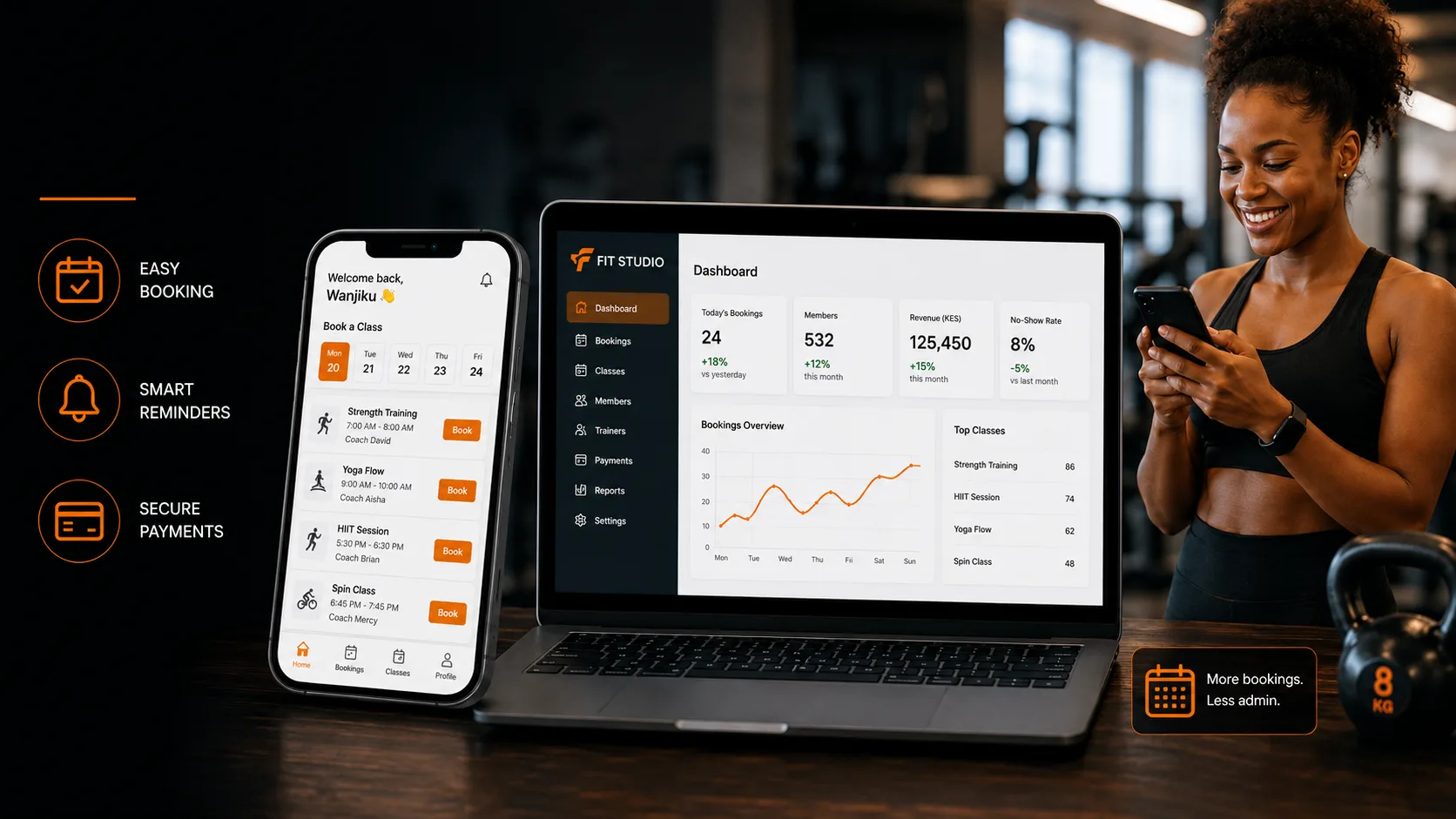
Running a fitness studio or gym involves juggling class schedules, membership renewals, trainer availability, and payments — often through a patchwork of WhatsApp messages, paper sign-in sheets, and manual spreadsheet tracking. It works at a small scale, but as class sizes grow and membership numbers increase, this manual approach becomes a genuine bottleneck, causing overbooked classes, missed renewals, and hours of avoidable administrative work.
A proper booking and membership system solves this. Here's what it should actually include.
Why Manual Booking Breaks Down as You Grow
- Overbooked classes happen when availability isn't tracked centrally across WhatsApp, phone calls, and walk-in sign-ups
- Missed membership renewals cost revenue when there's no automated way to track and follow up on expiring memberships
- Trainer scheduling conflicts arise when availability isn't visible in one shared, reliable system
- Manual payment tracking creates errors and makes it difficult to reconcile who's actually paid versus who's overdue
A dedicated system addresses all of these by centralizing scheduling, membership status, and payments in one place — for both staff and members.
Key Features to Look for in a Fitness Booking System
1. Real-Time Class and Session Booking
Members should be able to see live class availability and book (or cancel) a spot instantly, without needing to message staff directly — reducing administrative burden while giving members more control and convenience.
2. Membership Management and Automated Renewals
The system should track each member's membership status, automatically flag upcoming expirations, and send renewal reminders — preventing the revenue leakage that comes from memberships quietly lapsing unnoticed.
3. M-Pesa Integration for Payments
For Kenyan gyms and studios, M-Pesa integration for both membership payments and drop-in class fees removes friction and speeds up the payment process significantly compared to manual cash handling or bank transfer confirmation.
4. Trainer and Instructor Scheduling
A shared, real-time view of trainer and instructor availability prevents double-booking and makes it easy to manage substitutions or schedule changes without confusion.
5. Waitlist Management
Popular classes often fill up — an automatic waitlist that notifies members when a spot opens up (due to a cancellation) improves the member experience and helps fill classes that would otherwise run under capacity.
6. Automated Reminders and Notifications
Automated class reminders reduce no-shows, while renewal and payment reminders reduce missed revenue — both significantly reducing the manual follow-up burden on staff.
7. Mobile-Friendly Booking
Most members will book classes from their phones, often while on the go. A booking flow that's fast and simple on mobile directly affects how consistently members actually use the system rather than reverting to WhatsApp requests.
8. Attendance Tracking
Tracking actual attendance (not just bookings) provides useful data on class popularity, member engagement patterns, and no-show rates — valuable information for planning class schedules and identifying members who might benefit from re-engagement outreach.
9. Reporting and Business Insights
Visibility into revenue, membership trends, class popularity, and peak usage times helps studio owners make informed decisions about scheduling, pricing, and growth — insights that are difficult to extract reliably from manual tracking.
Off-the-Shelf vs Custom Fitness Booking Systems
Generic fitness booking platforms can work well for studios with fairly standard class structures and a tighter budget, offering faster setup at lower initial cost. Studios with more specific needs — multiple locations, varied membership tiers, personal training alongside group classes, or particular local payment and communication requirements — often get more long-term value from a custom-built system designed around their exact operations, similar to the broader decision covered in our guide on off-the-shelf vs custom software for Kenyan SMEs.
A Realistic Rollout Approach
- Start with core booking and M-Pesa payment integration — the highest-impact features first
- Add automated reminders and renewal tracking once the core system is running smoothly
- Layer in trainer scheduling and waitlist management as class volume grows
- Add reporting and analytics once there's enough data flowing through the system to generate meaningful insights
This phased approach keeps initial investment manageable while addressing the most pressing pain points first.
What This Means for Member Experience
Beyond the operational benefits for studio owners, a proper booking system genuinely improves the member experience — instant booking without waiting for a WhatsApp reply, automatic reminders so classes aren't missed, and a smoother payment process. For fitness businesses competing for member retention in an increasingly crowded market, this convenience can be a meaningful differentiator.
Build a Booking System That Fits Your Studio
At Blessedave Technologies, we build booking and membership systems for gyms and fitness studios — with real-time class booking, M-Pesa payment integration, and trainer scheduling designed around how your specific business operates.
Talk to us about a booking system for your fitness studio at blessedavetechnologies.com.