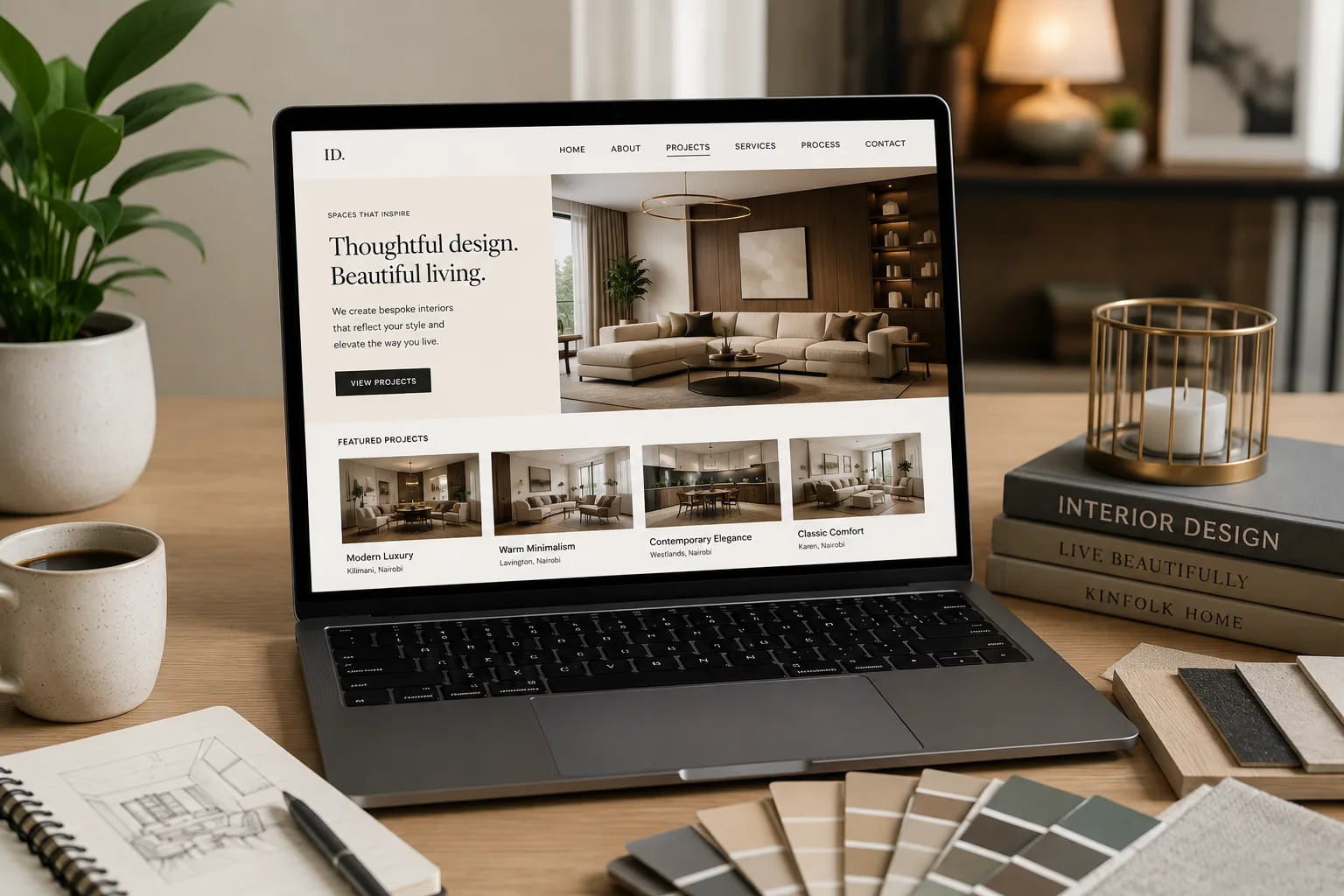
For interior designers, the work speaks for itself — but only if potential clients actually see it presented well. A portfolio website is often the deciding factor between a prospective client reaching out and quietly moving on to a competitor's page. Unlike many service businesses, interior design is inherently visual, which means the website itself needs to demonstrate the same taste, attention to detail, and quality the designer would bring to an actual project.
Here's what genuinely makes clients say yes.
Why the Website Itself Is Part of the Pitch
For an interior designer, a poorly designed, cluttered, or generic-feeling website sends an uncomfortable message: if this is how they present their own work, what does that suggest about the quality and care they'd bring to a client's home or space? The website isn't just a place to display the portfolio — its own design quality is implicitly part of the pitch.
What Makes an Interior Design Portfolio Website Actually Convert
1. High-Quality, Well-Curated Photography
This is non-negotiable for interior design. Professional, well-lit photography of completed projects matters more here than in almost any other industry — a stunning space photographed poorly undersells the work, while even a modest project photographed well can look genuinely impressive.
2. Organized, Browsable Project Galleries
Rather than one long, undifferentiated scroll of images, organizing projects into clear categories — by room type, style, or project scale — helps potential clients quickly find work relevant to what they're envisioning for their own space.
3. Before-and-After Presentations
Where available, before-and-after comparisons are particularly persuasive for interior design specifically, since they demonstrate transformation and problem-solving — not just an attractive finished result, but the designer's actual value in getting there.
4. A Clear Point of View or Signature Style
Clients are often drawn to a designer specifically because of a recognizable aesthetic or approach. A portfolio that clearly communicates a distinct point of view — rather than an unfocused mix of every possible style — helps the right clients self-select and reach out with genuine confidence in the fit.
5. Project Details and Context
Brief context alongside each project — the brief, the challenge, the space's constraints, the client's goals — helps potential clients understand the designer's process and problem-solving approach, not just the visual outcome.
6. An "About" Section With Real Personality
Interior design is a deeply personal, trust-based service — clients are inviting someone into their home or workspace. A genuine, well-written About section that conveys personality and process (not just credentials) helps potential clients feel a personal connection before ever meeting in person.
7. Clear Service Offerings and Process
Explaining what services are actually offered (full design, consultation only, specific room types, commercial vs residential) and how the process typically works removes ambiguity and helps potential clients understand what working together would actually involve.
8. Client Testimonials
Genuine testimonials — ideally specific rather than generic — reinforce credibility and give potential clients a sense of what working with the designer is actually like from someone else's perspective.
9. Easy, Low-Friction Contact
A clear, simple way to inquire — a contact form, a consultation request, direct contact details — removes friction at the exact moment a visitor has decided they're interested. An interior design website should make the next step obvious, not something visitors have to search for.
10. Fast Loading Despite Rich Visual Content
Interior design websites are inherently image-heavy, which creates a real tension with site speed. Proper image optimization is essential — a beautiful portfolio that loads slowly will lose visitors before they ever see the work, undermining the entire point of the site.
Common Mistakes Interior Design Websites Make
- Low-quality or inconsistent photography that undersells genuinely good work
- Unorganized galleries that make it hard for visitors to find relevant projects quickly
- Slow loading times from unoptimized, oversized images
- No clear point of view, making it hard for the right clients to recognize a fit
- Missing or buried contact information, adding friction at the critical moment of interest
- No mobile optimization, despite many potential clients browsing portfolios from their phones
Mobile Experience Matters More Than You'd Think
Given how visual interior design work is, it's tempting to assume clients will primarily browse on a larger screen — but a significant share of initial research still happens on mobile. A portfolio that looks stunning on desktop but loads slowly or displays poorly on a phone loses a meaningful share of potential inquiries before they ever reach the gallery.
Building an SEO Foundation Alongside the Portfolio
Beyond the visual portfolio itself, a well-structured interior design website should include genuinely useful supporting content — style guides, room-by-room tips, project write-ups — that helps the site appear in relevant searches from potential clients researching design ideas, not just those already searching for a specific designer by name.
Build a Portfolio Website That Actually Wins Clients
At Blessedave Technologies, we build portfolio websites for interior designers with fast-loading, beautifully organized galleries, a clear presentation of style and process, and low-friction ways for visitors to get in touch — designed to convert browsing visitors into scheduled consultations.
Talk to us about your interior design portfolio website at blessedavetechnologies.com.