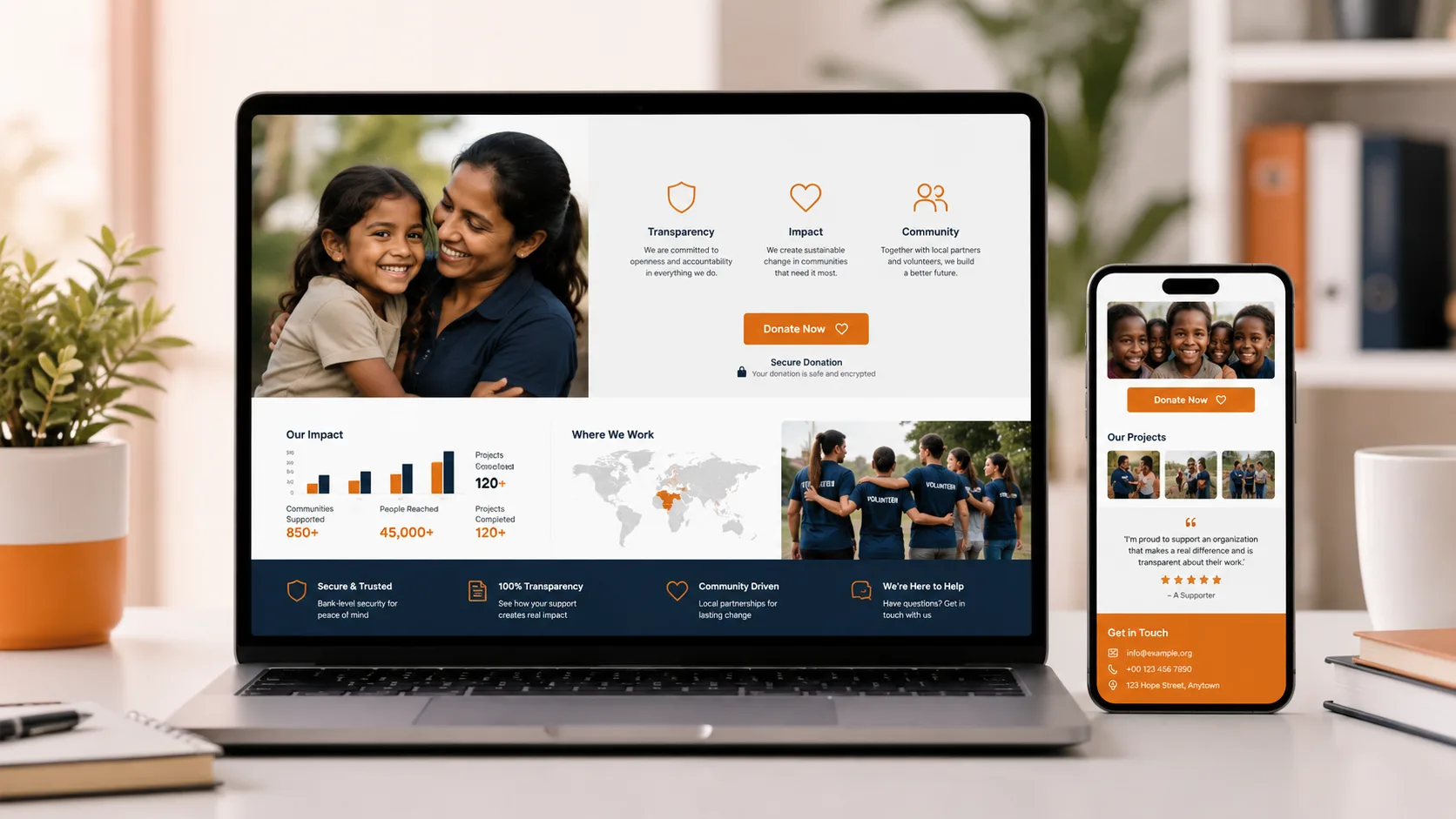
Before a donor — whether an individual, a corporate partner, or an international funding body — commits money to an NGO, they almost always check the organization out online first. In a sector where trust is everything and skepticism about fund misuse runs high, an NGO's website is often the single most important tool it has for demonstrating legitimacy, transparency, and real impact, long before any formal proposal or conversation.
Yet many Kenyan NGOs still operate with outdated, incomplete, or entirely absent websites — a significant, avoidable gap in an environment where funding is increasingly competitive.
Why Digital Presence Matters Especially for NGOs
Unlike a typical business transaction, donating to an NGO involves genuine trust with limited immediate return — the donor is relying largely on reputation, transparency, and demonstrated impact rather than a tangible product exchanged in return. A weak digital presence doesn't just fail to help; it actively raises doubt about an organization's legitimacy and capability at exactly the moment it needs to project confidence.
What a Trust-Building NGO Website Needs
1. A Clear, Specific Mission Statement
Vague mission language ("empowering communities") does far less to build confidence than a specific, concrete statement of what the organization actually does, for whom, and why it matters — donors respond to clarity and specificity, not broad, generic language.
2. Demonstrated Impact, With Real Numbers and Stories
Donors want evidence, not just intentions. Concrete impact data — number of people served, specific program outcomes, before-and-after case studies — paired with genuine stories (with appropriate consent and privacy considerations) does more to build trust than descriptive language alone.
3. Financial Transparency
Clear information about how funds are used — a summary of program versus administrative spending, links to audited financial statements or annual reports where available — signals accountability in a sector where donors are increasingly cautious about fund misuse.
4. Team and Leadership Profiles
Named leadership and key staff, with photos and relevant credentials, humanize the organization and build confidence that real, qualified people are responsible for how funds are used — an anonymous "About Us" page does considerably less to establish this.
5. Clear, Easy Donation Pathways
A donation process that's confusing, slow, or lacks local payment options (M-Pesa integration matters significantly for Kenyan donors specifically) creates friction at the exact moment a donor has decided to give — removing that friction directly affects how much funding actually converts from intent to completed donation.
6. Partner and Funder Recognition
Displaying existing partnerships, funders, or accreditations (where appropriate and with permission) provides third-party validation — donors reasonably infer that if other credible organizations or funders have already vetted and supported this NGO, it's a safer bet for their own contribution.
7. Regular Updates and Active Content
An NGO website that hasn't been updated in years — outdated news, an inactive blog, stale program information — signals potential inactivity or neglect, even if the organization's actual work is ongoing and effective. Regular updates (program news, impact stories, upcoming initiatives) signal a genuinely active, well-run organization.
8. Clear Ways to Get Involved Beyond Donating
Volunteering opportunities, partnership inquiries, and other engagement pathways — clearly presented — expand how a website serves the organization's broader goals beyond fundraising alone.
What Undermines Donor Trust
- Outdated or broken websites that make an active, legitimate organization look neglected or defunct
- Vague impact claims without specific data or evidence to support them
- No visible financial transparency, leaving donors to wonder how their contribution will actually be used
- Difficult or confusing donation processes, particularly the absence of familiar local payment methods like M-Pesa
- No clear way to verify the organization's legitimacy — missing registration details, no physical address, no way to confirm the people behind it
SEO and Visibility Matter Too
Beyond trust, a well-structured NGO website with genuine, specific content also helps the organization appear in searches from potential donors, volunteers, and partners actively looking for causes or organizations to support — an often-overlooked benefit of investing in a proper digital presence beyond its role in building trust with visitors who already know about the organization.
A Realistic Approach for Resource-Constrained NGOs
Many NGOs operate with limited budgets, making a full-scale website overhaul feel daunting. A practical starting sequence:
- A clean, professional website with a clear mission statement, impact section, and easy donation pathway (including M-Pesa)
- Basic financial transparency — even a simple summary page, with fuller reports linked where available
- Named leadership profiles to humanize the organization
- A modest, regularly updated news or impact section, expanded over time as capacity allows
Build a Website That Earns Donor Confidence
At Blessedave Technologies, we build websites for NGOs and nonprofits designed specifically to demonstrate transparency, showcase real impact, and make giving simple — including M-Pesa-integrated donation pathways suited to Kenyan donors.
Talk to us about your NGO's website at blessedavetechnologies.com.