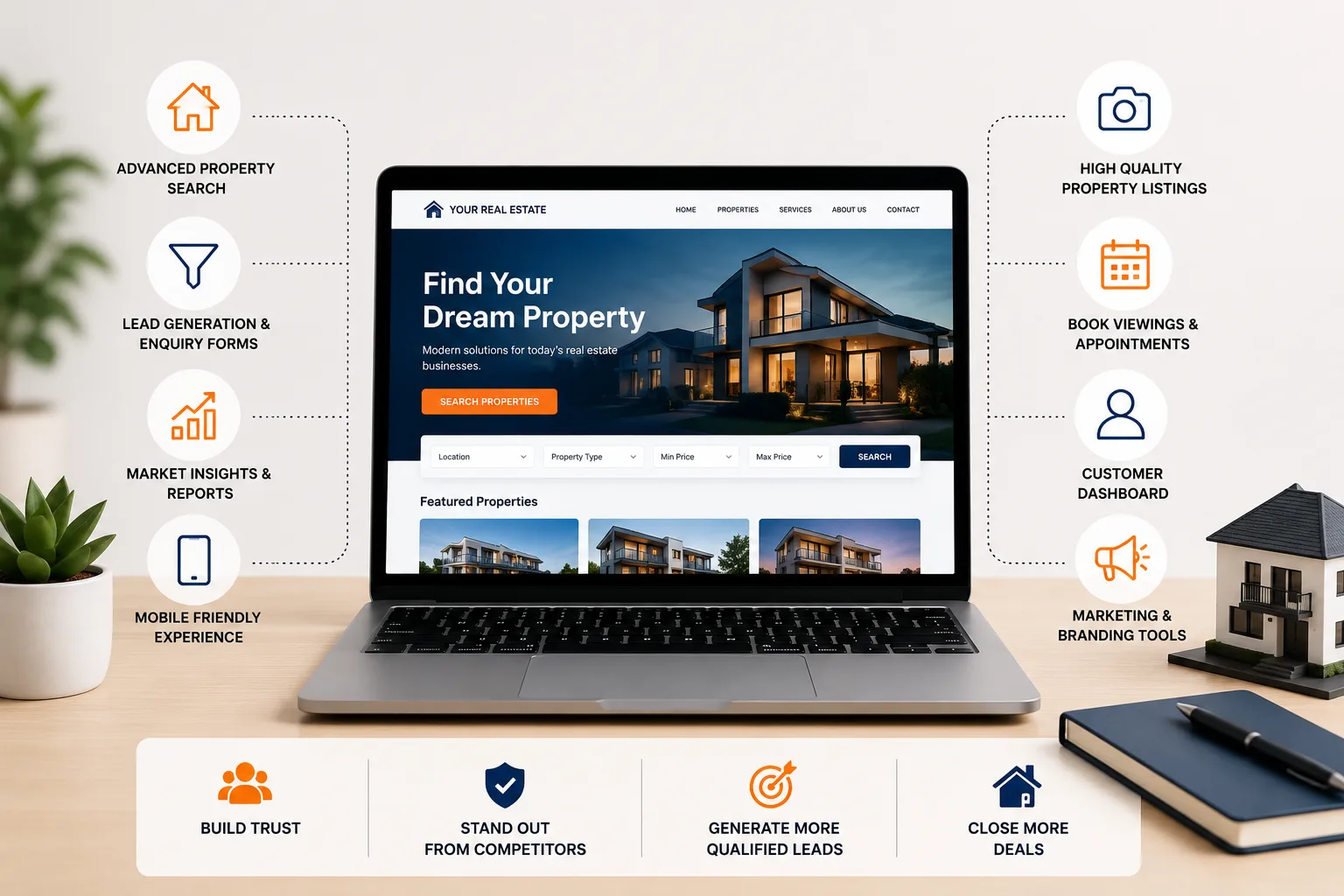
Nairobi's real estate market moves fast — and increasingly, it moves online. Buyers, renters, diaspora investors, and land buyers alike now start their property search on a screen long before they ever call an agent or visit a site. Yet many real estate companies in Kenya are still relying on a basic, brochure-style website: a homepage, an "About Us" page, a contact form, and maybe a handful of static property photos.
That kind of website worked a decade ago. Today, it's quietly costing real estate businesses serious leads. Here's why a basic website isn't enough anymore — and what a real estate company actually needs instead.
The Problem with Basic Real Estate Websites
A simple, static website typically has:
- No searchable or filterable property listings
- No way to inquire about a specific property directly
- Outdated listings that never get updated
- No mobile optimization, even though most property searches happen on a phone
- No lead capture beyond a generic "Contact Us" form
- No integration with payment platforms, agents, or property management tools
For a business selling one of the biggest purchases a customer will ever make, that's a serious credibility gap — and a lot of lost opportunity.
What Real Estate Companies Actually Need
1. A Searchable, Filterable Property Database
Buyers and renters want to filter by location, price range, property type, and number of bedrooms — not scroll through a static gallery hoping to find something relevant. A proper property listing system with search and filters keeps visitors engaged instead of bouncing to a competitor's site.
2. Individual Property Pages with Full Detail
Each listing deserves its own page: photos, price, location, amenities, floor plans, and a direct inquiry button. This also does double duty for SEO — individual property pages can rank for specific searches like "3 bedroom apartment for rent in Kilimani."
3. Mobile-First Design
The majority of property searches in Kenya happen on mobile devices. If a site isn't fast and easy to browse on a phone — with tappable filters, swipeable photo galleries, and quick-loading pages — most visitors won't stick around long enough to find what they're looking for.
4. Lead Capture That Goes Beyond a Contact Form
Serious real estate websites capture leads at multiple points: inquiry buttons on individual listings, WhatsApp click-to-chat integration, newsletter sign-ups for new listings, and callback request forms. Every one of these is a chance to turn a browsing visitor into an actual client.
5. Agent Profiles and Verification Signals
Buyers want to know who they're dealing with. Agent profiles, verified listing badges, and transparent contact details build the trust needed for someone to commit to a viewing — or a purchase — with a company they've never met in person.
6. Integration with Payment and CRM Systems
For real estate companies managing rentals, deposits, or installment land sales, integrating M-Pesa payments and a CRM to track inquiries and follow-ups isn't a luxury — it's what keeps leads from falling through the cracks between a phone call and a signed agreement.
7. SEO Built for Local Property Searches
Generic homepage SEO isn't enough. Real estate companies need content and structure built around how people actually search: by neighbourhood ("apartments in Westlands"), by property type ("land for sale in Kiambu"), and increasingly, through questions answered directly by AI search tools.
8. A Content Strategy, Not Just Listings
The strongest real estate websites don't just list properties — they publish neighbourhood guides, investment tips, and market updates that keep bringing organic traffic back long after a specific listing sells or gets rented out.
The Cost of Standing Still
Every month a real estate company runs on a basic, static website, it's likely losing leads to competitors who've invested in a proper property platform — not because their properties are better, but because their website makes it easier to search, trust, and act.
Build a Real Estate Website That Actually Converts
At Blessedave Technologies, we build property websites and platforms with the searchable listings, mobile-first design, lead capture, and payment integrations Kenyan real estate companies need to turn website visitors into buyers, renters, and long-term clients.
Request a quote for your real estate website or platform at blessedavetechnologies.com.